Osteoporosis-Related Exercise & Mobility Needs

Osteoporosis can affect bone strength, movement, balance, and confidence during everyday activities. People living with osteoporosis may need guidance on safe exercise, posture, balance, and mobility to support daily function while considering their risk of fractures. At The Bright Physio & Mindfulness Massage in Edmonton, care for Osteoporosis-Related Exercise & Mobility Needs focuses on movement patterns, physical abilities, balance, and individual activity goals. Physiotherapy-based exercise planning can help people understand which activities may be suitable for their condition and how to approach movement with appropriate precautions. Whether someone wants to maintain walking ability, improve balance, or manage daily tasks with greater confidence, an assessment can help identify relevant physical needs and suitable exercise options.
What are Osteoporosis-Related Exercise & Mobility Needs?
Osteoporosis is a condition that reduces bone density and can make bones more susceptible to fractures. It often develops without noticeable symptoms until a fracture occurs. The spine, hip, and wrist are among the areas commonly affected by osteoporosis-related fractures.
Osteoporosis-Related Exercise & Mobility Needs refer to the physical activity, movement support, balance training, posture awareness, and functional exercises that may be appropriate for people living with low bone density or osteoporosis.
The purpose of this care is to help individuals remain physically active while considering bone health, fracture history, current strength, balance, and movement limitations. Exercise selection depends on the person’s health status, physical capacity, and any medical restrictions.
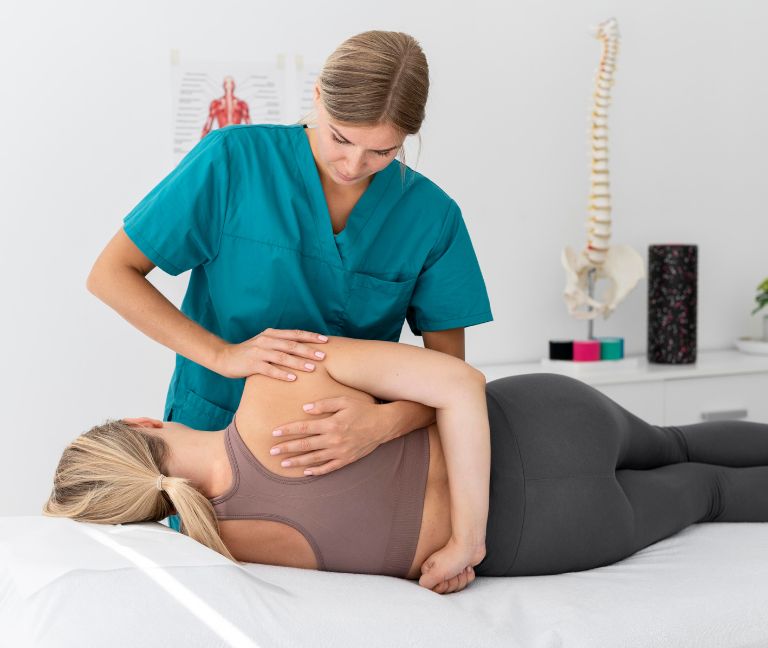
A physiotherapy assessment may examine walking patterns, lower-body strength, balance, posture, flexibility, and the ability to complete daily activities. Based on these findings, a physiotherapist can suggest suitable exercises and movement strategies.
Exercise plans may include weight-bearing activities, resistance exercises, balance training, posture exercises, and functional movement practice. However, not every activity is appropriate for every person. Individuals with vertebral fractures, severe osteoporosis, or a history of fragility fractures may need specific precautions, including avoiding certain loaded or repeated spinal bending and twisting movements.
At The Bright Physio & Mindfulness Massage in Edmonton, discussions about Osteoporosis-Related Exercise & Mobility Needs can focus on safe movement, everyday function, and practical ways to remain active within an individual’s physical limits.
Who Can Benefit from Osteoporosis-Related Exercise & Mobility Needs Support?
Exercise and mobility support may be relevant to adults with osteoporosis, low bone density, reduced balance, or concerns about fractures during physical activity.
1. Adults Diagnosed with Osteoporosis
People with a confirmed osteoporosis diagnosis may need advice about suitable physical activities, strength exercises, posture, and balance. A physiotherapist can consider their fracture history, current mobility, and medical recommendations when suggesting exercises.
2. Individuals With Osteopenia
Osteopenia refers to bone density that is lower than the expected range but does not meet the diagnostic threshold for osteoporosis. Appropriate weight-bearing and resistance activities may form part of a broader plan to support bone health, depending on the person’s circumstances.
3. Older Adults with Balance Concerns
Changes in balance, leg strength, vision, and walking ability can increase the risk of falls. Exercise programs that address balance, lower-body strength, and functional movement may help older adults practice safer movement.
4. People Returning to Activity After a Fracture
Individuals recovering from a fracture associated with low bone density may need a gradual return to activity. Exercise selection and progression should reflect fracture healing, medical clearance, pain, and functional ability.
5. Adults Who Feel Uncertain About Exercise
Some people reduce their activity because they worry that movement could cause a fracture. Appropriate assessment and exercise instruction can help clarify which activities may be suitable and which movements may require modification.
6. Individuals Experiencing Changes in Everyday Mobility
People who find walking, climbing stairs, standing from a chair, or completing household tasks difficult may benefit from an assessment of strength, balance, and movement patterns.
Problems Addressed by Osteoporosis-Related Exercise & Mobility Needs
Osteoporosis can influence how people approach exercise and daily movement. Although exercise cannot eliminate fracture risk or reverse established osteoporosis on its own, appropriate physical activity may support strength, balance, posture, and functional capacity.
Common concerns include:
- Reduced balance: Difficulty maintaining stability while standing, turning, or walking on uneven surfaces.
- Lower-body weakness: Challenges when rising from a chair, climbing stairs, or walking longer distances.
- Fear of falling: Hesitation when moving around the home or participating in everyday activities.
- Postural changes: Increased forward rounding of the upper back or difficulty maintaining an upright position.
- Reduced physical activity: Avoiding exercise because of uncertainty about safe movements.
- Limited mobility: Difficulty completing routine tasks that require strength, coordination, or controlled movement.
- Previous fragility fractures: The need to account for a previous fracture when selecting and progressing exercises.
- Reduced confidence with movement: Concerns about lifting, bending, reaching, or changing positions.
The appropriate approach depends on the person’s condition and medical history. New or unexplained back pain, sudden loss of mobility, or pain following a fall requires prompt medical assessment rather than an attempt to exercise through the symptoms.
Exercise and Mobility Services That May Be Included
Care for Osteoporosis-Related Exercise & Mobility Needs may involve several components, depending on the findings of an initial assessment and the person’s medical circumstances.
1. Weight-Bearing Exercise
Weight-bearing activities place the body against gravity and can include walking, stair climbing, or other upright activities. These activities may support bone health and general physical function.
The amount and type of activity should reflect the individual’s balance, fracture risk, and physical capacity. Walking alone may not address every aspect of bone health, so other forms of exercise may also be considered.
2. Resistance Exercise
Resistance exercises involve muscles working against an external load or resistance. Examples may include controlled sit-to-stand movements, resistance-band exercises, and selected strength exercises for the legs, hips, back, and arms.
The resistance, repetitions, and movement range should be appropriate for the individual. People with osteoporosis may need instruction on posture, lifting methods, and spinal positioning during exercise.
3. Balance and Coordination Training
Balance exercises may involve controlled weight shifting, supported standing, stepping, and other activities suited to the person’s abilities.
The aim is to practice maintaining stability during daily movements. Exercises may be performed beside a stable support, when necessary, particularly for individuals with a history of falls or significant balance limitations.
4. Posture and Back-Strengthening Exercises
Posture-focused exercise may address upper-back strength, body alignment, and awareness of spinal positioning during everyday tasks.
For some people, exercises that strengthen the back muscles and encourage an upright posture may be appropriate. The program should account for vertebral fractures, spinal curvature, pain, and other clinical findings.
5. Functional Mobility Training
Functional exercises practice movements used in daily life, such as standing from a chair, stepping up, turning, and walking.
A physiotherapist may assess how these movements are performed and suggest changes to improve control, stability, and movement efficiency.
6. Safe Movement and Activity Education
Education may cover how to approach lifting, reaching, bending, carrying household items, and transitioning between sitting and standing.
People with osteoporosis, particularly those with spinal fractures, may need to limit loaded spinal flexion and forceful twisting. A physiotherapist can explain movement modifications relevant to the individual’s condition.
7. Home Exercise Planning
A home exercise plan may help individuals practice selected movements between appointments. It can include instructions about exercise frequency, repetitions, progression, balance precautions, and situations in which an activity should be stopped.
The plan should be reviewed when symptoms, mobility, or medical circumstances change.
How the Osteoporosis Exercise and Mobility Process Works
At The Bright Physio & Mindfulness Massage in Edmonton, the process for addressing Osteoporosis-Related Exercise & Mobility Needs may follow these steps, depending on the services available and the individual’s clinical requirements.
Step 1: Initial Consultation
The process begins with a discussion of the person’s concerns, current activity levels, osteoporosis diagnosis, fracture history, mobility goals, and relevant medical recommendations.
This discussion helps identify activities that may need modification and questions that require input from the person’s physician.
Step 2: Physical Assessment
The physiotherapist may assess balance, walking, posture, functional strength, joint movement, and the ability to complete selected daily tasks.
The assessment should account for pain, previous fractures, fall history, and any restrictions recommended by the treating healthcare provider.
Step 3: Exercise Planning
Based on the assessment, the physiotherapist can identify suitable exercise categories, starting activity levels, movement precautions, and ways to progress gradually.
The plan may include strength, balance, posture, and functional mobility exercises. Individuals with significant fracture risk may require additional medical assessment before certain activities are introduced.
Step 4: Guided Exercise Practice
Exercises are practiced with attention to body positioning, movement control, breathing, and safe use of support when needed.
The physiotherapist can explain how to perform selected movements and identify adjustments that may be necessary.
Step 5: Progress Review
Progress may be reviewed through changes in movement control, exercise tolerance, balance performance, functional ability, and confidence during daily activities.
Exercises can be adjusted according to the person’s response and any changes in their health status.
Step 6: Home Activity and Follow-Up
The person may receive a home exercise routine and advice about applying safe movement principles during daily activities. Follow-up appointments can help review exercise technique and determine whether changes are appropriate.
The frequency of follow-up depends on individual needs, clinical findings, and the agreed plan.
Benefits of Appropriate Exercise and Mobility Support
Appropriate exercise can contribute to physical function and activity participation for people living with osteoporosis. Results vary according to health status, exercise consistency, fracture history, and other factors.
Potential benefits include:
- Improved muscle strength: Resistance exercises can support the muscles used for walking, standing, lifting, and stair climbing.
- Improved balance performance: Balance practice may help individuals develop control during standing and movement.
- Support for bone health: Suitable weight-bearing and resistance exercises can form part of a broader bone-health plan.
- Posture awareness: Targeted exercises and movement education may help people practice more upright positions.
- Daily activity skills: Functional exercises can address movements such as rising from a chair and stepping onto a stair.
- Greater confidence during activity: Clear instructions about movement precautions may reduce uncertainty about participating in appropriate exercises.
- Fall-risk management: Exercise can address some modifiable factors associated with falls, although it cannot eliminate all fall or fracture risk.
- Activity planning: A structured routine can help people monitor their activity and follow recommended exercise precautions.
Exercise is one part of osteoporosis management. Nutrition, medical assessment, fall prevention, and any prescribed treatment may also be important.
Who May Require Osteoporosis Exercise and Mobility Services?
Osteoporosis-related exercise support may be relevant across several groups and circumstances.
Older Adults
Older adults may seek support with balance, walking, lower-body strength, and everyday movement. Their exercise plans may need to account for changes in vision, sensation, joint movement, and fall risk.
Adults With Low Bone Density
Individuals diagnosed with osteopenia may wish to discuss weight-bearing and resistance activities as part of their general bone-health plan.
People With Previous Fractures
Those with a history of wrist, hip, or spinal fractures may need exercise modifications based on the location and severity of the fracture and their current medical status.
Adults With Reduced Activity Levels
People who have become less active due to fear of falling, reduced strength, or mobility concerns may benefit from an assessment before restarting exercise.
Individuals Managing Multiple Physical Conditions
People who have osteoporosis alongside arthritis, balance disorders, or other mobility limitations may need an exercise plan that accounts for each condition.
Frequently Asked Questions
1. What are Osteoporosis-Related Exercise & Mobility Needs?
Osteoporosis-Related Exercise & Mobility Needs refer to exercise planning, strength development, balance training, posture awareness, and functional movement support for people with osteoporosis or low bone density. The approach should account for fracture risk, medical history, mobility, and individual activity goals.
2. Can exercise help people with osteoporosis?
Yes. Appropriate weight-bearing, resistance, balance, and posture exercises can support muscle strength, physical function, and fall-risk management. Some exercise types may also support bone health. Exercise does not remove fracture risk, and the program should reflect the person’s medical condition.
3. Which exercises should people with osteoporosis avoid?
Some people, particularly those with vertebral fractures or severe osteoporosis, may need to avoid repeated or forceful spinal bending, loaded twisting, and high-impact activities that exceed their capacity. The appropriate restrictions depend on the individual’s condition, so exercise choices should be discussed with a qualified healthcare professional.
4. Can physiotherapy help with balance and walking concerns?
Physiotherapy may include balance assessment, strength exercises, walking practice, and functional movement training. These activities can address some physical factors associated with falls and mobility limitations. Results vary, and an assessment is needed to determine suitable exercises.
5. Where can I seek support for osteoporosis-related exercise in Edmonton?
People in Edmonton can contact The Bright Physio & Mindfulness Massage to ask about available physiotherapy services for osteoporosis-related exercise and mobility concerns. The clinic can clarify its services, appointment availability, and whether an initial assessment is appropriate for the person’s circumstances.
Osteoporosis Exercise and Mobility Support in Edmonton
People seeking help with Osteoporosis-Related Exercise & Mobility Needs can look for physiotherapy services that account for bone health, physical function, balance, posture, and movement precautions.
The Bright Physio & Mindfulness Massage serves the Edmonton community. Individuals can contact the clinic to ask about available services, appointment arrangements, and the information required before an initial assessment.
The appropriate exercise plan depends on factors such as fracture history, current mobility, balance, pain, and medical recommendations. People with recent fractures, sudden severe back pain, or new symptoms following a fall should seek medical assessment before beginning an exercise program.
Why Consider The Bright Physio & Mindfulness Massage?
When contacting The Bright Physio & Mindfulness Massage about osteoporosis-related concerns, consider asking how the clinic assesses mobility, selects appropriate exercises, and accounts for previous fractures or fall risk.
Useful questions include:
- Does the clinic assess balance, posture, and functional mobility?
- Are exercise recommendations adjusted for osteoporosis and fracture history?
- Can the physiotherapist explain movement precautions for everyday tasks?
- Is a home exercise plan available when clinically appropriate?
- How are progress and exercise tolerance reviewed?
These questions can help you determine whether the clinic’s available services match your needs. Confirm the clinic’s current service availability and practitioner qualifications directly before booking.
Related Services
Depending on availability, people with osteoporosis-related mobility concerns may also wish to ask about services addressing:
- Balance and fall-risk assessment
- Strength and conditioning exercises
- Posture and movement training
- Gait and functional mobility
- Exercise planning for older adults
- Rehabilitation following a medically assessed fracture
The suitability of each service depends on the individual’s condition and clinical requirements.
Contact The Bright Physio & Mindfulness Massage.
If osteoporosis or low bone density has raised questions about exercise, walking, balance, or everyday movement, contact The Bright Physio & Mindfulness Massage in Edmonton to ask about available physiotherapy services.
During your inquiry, mention your diagnosis, previous fractures, current mobility concerns, and any movement restrictions provided by your healthcare team. This information can help the clinic determine what details are needed before arranging an appointment.
Take the Next Step
Contact The Bright Physio & Mindfulness Massage to enquire about Osteoporosis-Related Exercise & Mobility Needs in Edmonton and ask whether an assessment can address your current movement goals.
Phone: +1 780-737-1019
Address: 4904 30 Ave #105, Beaumont, Edmonton, AB T4X 3G3, Canada

 +1 (780) 737-1019