Scoliosis Treatment in Calgary
Scoliosis Treatment in Calgary
Living with scoliosis can affect more than posture. It may lead to ongoing back discomfort, muscle fatigue, reduced flexibility, and difficulty with everyday movement. At PhysioNation, we provide physiotherapy for people living with scoliosis in Calgary. Every assessment begins with a detailed review of your posture, spinal movement, strength, mobility, and daily activities so your care plan reflects your current needs and goals.
Whether scoliosis has recently been identified or has been present for many years, physiotherapy can play an important role in improving movement, building strength, and supporting day-to-day function.
What Is Scoliosis?
Scoliosis is a condition in which the spine curves to the side rather than remaining relatively straight when viewed from behind. The curve may resemble the shape of the letter “C” or “S” and can occur in different areas of the spine.
Some people have mild curves that require monitoring, while others may experience larger curves that influence posture, balance, breathing, or physical activity. The condition affects children, teenagers, and adults, though the reasons behind scoliosis can differ by age.
Common forms of scoliosis include:
- Idiopathic scoliosis
- Degenerative scoliosis
- Congenital scoliosis
- Neuromuscular scoliosis
A physiotherapy assessment helps identify how the spinal curve influences movement, muscle function, flexibility, and daily activities.


Who Can Benefit From Physiotherapy for Scoliosis?
Physiotherapy may be suitable for many people living with scoliosis, including:
- Children and adolescents whose spinal curve is being monitored.
- Adults living with long-standing scoliosis.
- Older adults with age-related spinal changes.
- People noticing uneven shoulders or hips.
- Individuals with recurring back discomfort linked to scoliosis.
- Athletes seeking improved movement and body control.
- People preparing for or recovering from spinal procedures.
Each person’s condition is different, making an individual assessment an important first step.
Challenges Associated With Scoliosis
Scoliosis affects people in different ways. Some experience very few symptoms, while others notice changes that interfere with daily life.
Common challenges include:
- Uneven shoulders or waistline
- One hip sitting higher than the other
- Back or neck discomfort
- Muscle tightness
- Muscle fatigue after standing or walking
- Reduced spinal mobility
- Difficulty maintaining posture
- Balance changes
- Limited flexibility
- Reduced tolerance for physical activity
Physiotherapy focuses on improving movement quality while addressing the physical limitations created by the spinal curve.
What Your Physiotherapy Program May Include
Detailed Physical Assessment
Your physiotherapist evaluates posture, spinal alignment, joint mobility, muscle strength, flexibility, balance, and movement patterns. This information serves as the foundation for your care plan.
Postural Training
Learning how to position your body while sitting, standing, walking, and engaging in daily activities can reduce unnecessary strain on the muscles surrounding the spine.
Mobility Exercises
Gentle mobility exercises help maintain spinal movement while reducing stiffness in surrounding joints and soft tissues.
Strength Training
Targeted strengthening focuses on muscles that support the spine, trunk, hips, and shoulders. Improved muscular support may help make everyday activities easier.
Core Stability
Core muscle training promotes improved trunk control and movement during lifting, walking, bending, and other daily tasks.
Stretching
Muscles affected by scoliosis often become tight over time. Stretching can improve flexibility and movement throughout the spine and surrounding areas.
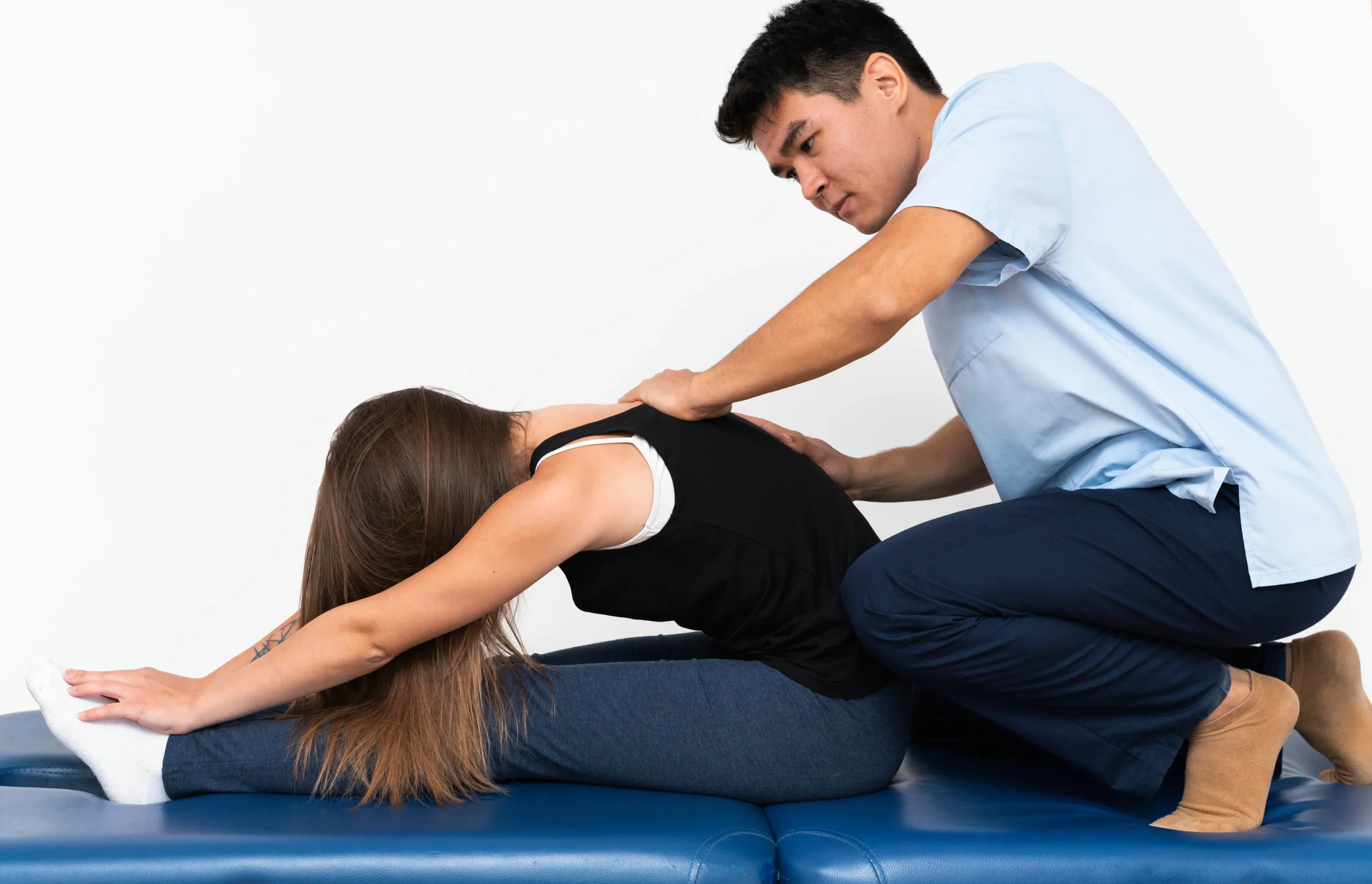
Manual Therapy
Hands-on treatment may be used to reduce joint stiffness, improve soft-tissue mobility, and increase movement, as appropriate.
Education
Learning about scoliosis, activity modification, posture, and exercise helps you manage your condition with confidence between appointments.
Home Exercise Program
Your physiotherapist will provide exercises to continue at home, helping maintain progress between clinic visits.
How Treatment Works
1. Initial Assessment
Your first appointment includes a discussion about your symptoms, medical history, activity level, and goals, followed by a physical assessment.
2. Movement Analysis
Posture, spinal mobility, flexibility, strength, walking pattern, and balance are evaluated to identify areas contributing to movement limitations.
3. Care Planning
Based on the assessment findings, your physiotherapist develops a structured program suited to your condition and daily routine.
4. Physiotherapy Sessions
Treatment may include manual therapy, strengthening exercises, mobility work, stretching, posture training, and movement education.
5. Progress Reviews
Your progress is monitored throughout care, allowing exercises and treatment methods to be adjusted as your condition changes.
6. Ongoing Self-Management
You receive practical strategies and exercises to continue supporting your spinal health outside the clinic.
Benefits of Physiotherapy for Scoliosis
Many people choose physiotherapy to help:
- Improve posture.
- Increase spinal mobility.
- Build core and back strength.
- Improve flexibility.
- Reduce muscle tightness.
- Increase balance and coordination.
- Make everyday activities more comfortable.
- Support participation in work, recreation, and sport.
- Improve overall movement quality.
- Build confidence in daily movement.
Results vary depending on factors such as age, the degree of spinal curvature, overall health, and participation in the exercise program.
Frequently Asked Questions
Can physiotherapy straighten scoliosis?
Physiotherapy typically does not fully straighten the spine. Its focus is to improve movement, posture, muscle strength, flexibility, and day-to-day function while helping manage symptoms associated with scoliosis.
Is exercise safe if I have scoliosis?
In many cases, yes. Exercises are selected according to your age, spinal curve, symptoms, and physical abilities.
Do adults with scoliosis benefit from physiotherapy?
Yes. Many adults attend physiotherapy to improve mobility, strengthen supporting muscles, and make everyday activities easier.
How many appointments will I need?
The number of visits depends on the severity of the condition, your goals, and how your body responds to treatment.
Can children receive physiotherapy for scoliosis?
Yes. Children and teenagers with scoliosis may attend physiotherapy as part of their ongoing management plan alongside recommendations from their healthcare providers.
Service Area
PhysioNation provides physiotherapy for scoliosis in Calgary. We welcome children, teenagers, adults, seniors, office workers, active individuals, and athletes seeking support for spinal movement and function. Our clinic serves residents throughout Calgary and nearby communities.
Why Choose PhysioNation?
Choosing physiotherapy for scoliosis involves finding a clinic that values careful assessment and clear communication. At PhysioNation, each visit focuses on how your scoliosis affects movement, posture, and daily activities. Your physiotherapist tracks progress throughout care and adjusts exercises as your condition changes, helping you continue moving with confidence.
Related Services
You may also be interested in:
- Back Pain Physiotherapy
- Neck Pain Physiotherapy
- Sports Injury Rehabilitation
- Postural Assessment
- Manual Therapy
- Exercise Rehabilitation
- Core Strength Training
- Workplace Injury Rehabilitation
Get Started
If scoliosis is making everyday movement more difficult, PhysioNation is here to help. Contact our Calgary clinic to arrange an assessment.
Address: CO-OP PLAZA HAMPTONS, 1000 Hamptons Dr NW #622, Calgary, AB T3A 6A7, Canada
Phone: +1 403-475-8816
We’ll discuss your symptoms, evaluate how your spine and muscles are functioning, and develop a physiotherapy plan that supports your movement goals and daily activities.