Acupuncture
Read More

If you are looking for a Kinesiologist in Delta, All Care Clinic provides movement-focused programs that help people improve physical function, increase strength, and return to everyday activities with confidence. Kinesiology uses exercise science and movement analysis to address mobility concerns, physical limitations, workplace injuries, chronic conditions, post-surgical recovery, and fitness goals.
Whether you are recovering from an injury, managing ongoing discomfort, returning to work, or simply looking to improve your physical condition, our team develops structured exercise programs based on your current abilities. Every program begins with a detailed assessment and progresses as your body adapts. At All Care Clinic, our goal is to help individuals throughout Delta, BC move more efficiently while supporting their overall physical health through evidence-based kinesiology services.
Kinesiology is the scientific study of human movement. A kinesiologist evaluates how muscles, joints, bones, and the nervous system work together during daily activities, sports, work tasks, and exercise. By identifying movement patterns, muscle imbalances, flexibility limitations, and physical weaknesses, a kinesiologist creates exercise-based programs that promote functional movement.
Unlike general fitness programs, kinesiology focuses on improving movement quality while considering previous injuries, existing medical conditions, occupational demands, and personal goals.
A Kinesiologist in Delta may assist individuals with:
Kinesiology is commonly incorporated into rehabilitation plans alongside physiotherapy and other rehabilitation services to support physical recovery through structured exercise progression.
Kinesiology supports people from many backgrounds and activity levels.
Long hours of sitting can contribute to poor posture, reduced mobility, muscle tightness, and repetitive strain. Exercise programming focuses on improving posture, flexibility, and muscular endurance.
Older adults often seek kinesiology to maintain mobility, improve balance, reduce fall risk, and stay physically active while performing everyday activities safely.
Competitive athletes and recreational sports participants can use kinesiology to improve movement efficiency, muscular strength, endurance, flexibility, and sport-specific performance.
Individuals returning after workplace injuries may require gradual conditioning before resuming full duties. Exercise programs can focus on rebuilding strength, stamina, and job-specific movement capacity.
Following procedures involving the knee, shoulder, hip, ankle, or spine, exercise progression can support mobility restoration, muscle activation, and functional recovery.
Many chronic conditions affect physical function over time. Exercise prescribed by a Kinesiologist in Delta may assist individuals managing:
Starting exercise without proper direction may increase the chance of injury. A kinesiologist creates structured programs suited to current fitness levels and long-term physical goals.
Many people seek kinesiology after noticing physical limitations that interfere with daily life.
Kinesiology may address concerns including:
Exercise programming focuses on improving movement quality while gradually increasing strength, endurance, coordination, and functional ability.
Your appointment begins with a detailed review of your health history, physical activity, current concerns, and movement goals.
The assessment may include:
This information helps determine which movement strategies are most appropriate.
Rather than focusing on a single painful area, movement is evaluated as a complete system.
This may identify:
These findings help guide exercise recommendations.
Each exercise program is developed according to the assessment findings.
Programs may include:
Exercises are progressed as physical abilities improve.
Many occupations require repetitive lifting, carrying, pushing, standing, or bending.
A Kinesiologist in Delta can create conditioning programs that reflect workplace demands, helping individuals prepare for a safe return to work following an injury.
These programs may include:
Following surgery, muscles often become weaker due to reduced activity.
Exercise progression focuses on gradually restoring:
Programs are adjusted according to recovery milestones and recommendations from the healthcare team.
Balance naturally changes with age, illness, and inactivity.
Training may include:
Improved balance may reduce fall risk while supporting everyday movement.
Limited flexibility and restricted movement can make daily activities more difficult.
Mobility programs may focus on:
Improving mobility often makes routine activities easier to perform.
Education is an important component of kinesiology.
Individuals learn:
Education helps individuals continue exercising safely between appointments and beyond.
At All Care Clinic, every kinesiology program follows a structured process that helps track progress while adapting to your changing needs.
Your first appointment begins with a discussion about your health history, current activity level, daily routine, previous injuries, surgery history, work demands, and personal goals. This conversation helps us understand how your physical condition affects everyday activities.
Next, a kinesiologist performs a movement assessment that may include:
The results help identify movement limitations and areas that require attention.
Using the assessment findings, your Kinesiologist in Delta develops an exercise program based on your goals, physical condition, and activity level. The plan progresses gradually to match your abilities while encouraging steady improvement.
Guided exercise sessions focus on proper technique, controlled movement, and gradual progression. Programs may be adjusted based on how your body responds and your overall progress.
Regular reassessments measure improvements in strength, mobility, endurance, balance, and functional movement. Exercises are updated as new goals are reached.
Many individuals continue their progress at home with structured exercises and activity recommendations. Home programs help reinforce the work completed during clinic visits and encourage continued physical activity.
Working with a Kinesiologist in Delta can support many aspects of physical function through structured exercise and movement education.
Potential outcomes include:
Exercise progression is monitored throughout the program to help individuals continue advancing safely.
All Care Clinic provides kinesiology services for people from a wide variety of backgrounds.
These include:
People who spend extended periods sitting at desks often seek movement programs that address posture, flexibility, and muscular endurance.
Nurses, caregivers, and healthcare staff frequently perform lifting, transferring, and prolonged standing, making physical conditioning an important part of injury recovery.
Workers in physically demanding occupations often require conditioning programs that prepare them for lifting, climbing, carrying, and repetitive movements.
Repetitive workplace tasks can contribute to physical strain. Exercise programs may focus on mobility, strength, and workplace movement.
Students recovering from injuries or beginning exercise routines can benefit from structured movement programs that fit their daily schedules.
Whether participating in organized sports or recreational activities, athletes may use kinesiology to improve strength, endurance, coordination, and movement quality.
Exercise programs can focus on mobility, balance, flexibility, and maintaining an active lifestyle.
A kinesiologist studies human movement and develops exercise programs that improve strength, mobility, balance, endurance, and overall physical function.
Anyone recovering from an injury, surgery, or workplace incident or looking to improve movement, fitness, or physical function may benefit from kinesiology services.
No. Kinesiology supports people of all ages and activity levels, including seniors, office workers, students, workers recovering from injuries, and individuals managing chronic conditions.
Comfortable clothing and supportive athletic footwear are recommended since movement assessments and exercises are typically performed during the visit.
The number of sessions varies depending on your goals, current condition, and progress. Your program is reviewed regularly and adjusted as needed.
Yes. Home exercise programs are often included to help maintain progress between appointments.
Exercise progression following surgery may support improvements in mobility, strength, endurance, and daily function when appropriate for your stage of recovery.
Coverage varies depending on your extended health plan. Our team can help you understand your available options before beginning treatment.
All Care Clinic proudly serves individuals throughout Delta, BC, including nearby communities such as:
If you are searching for a Kinesiologist in Delta, our clinic welcomes individuals from Delta and surrounding communities looking for structured exercise and movement-focused care.
Choosing a healthcare provider is an important decision. At All Care Clinic, we focus on careful assessment, clear communication, and exercise programs that align with each person’s physical abilities and goals.
Our approach includes:
Whether your goal is returning to work, staying active, recovering after surgery, or improving everyday movement, our team works with you through each stage of your program.
Many individuals combine kinesiology with other rehabilitation services available at All Care Clinic, including:
These services can work together to support movement, physical function, and ongoing recovery based on your individual needs.
If you’re searching for a Kinesiologist in Delta, All Care Clinic is here to support your movement and exercise goals. Whether you’re recovering after an injury, returning to work, managing a long-term condition, or looking to improve your physical fitness, our team will begin with a detailed assessment and create an exercise program based on your current abilities. Call 236-332-6237 to book your appointment or visit us at 8425 120 Street, Unit 103 (LifeLabs Building, Ground Floor), Delta, BC V4C 6R2.
Your visit starts with a movement evaluation to identify your strengths, mobility, and functional needs. From there, we’ll develop a structured exercise plan, monitor your progress, and adjust your program as you advance. Contact us today to schedule your assessment and learn how working with a Kinesiologist in Delta can help you move with greater confidence in your daily activities.
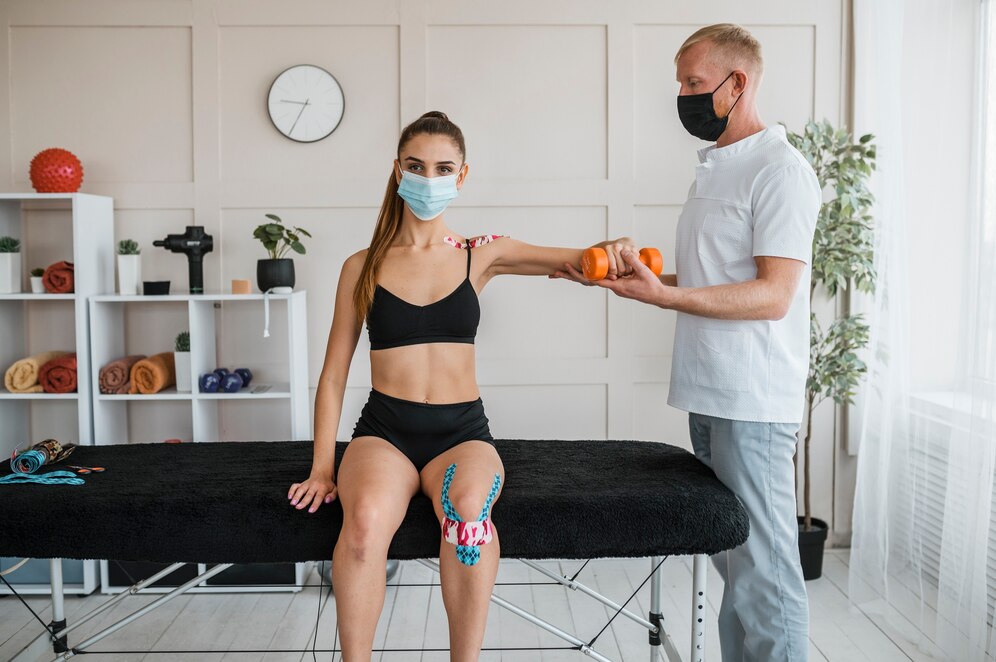
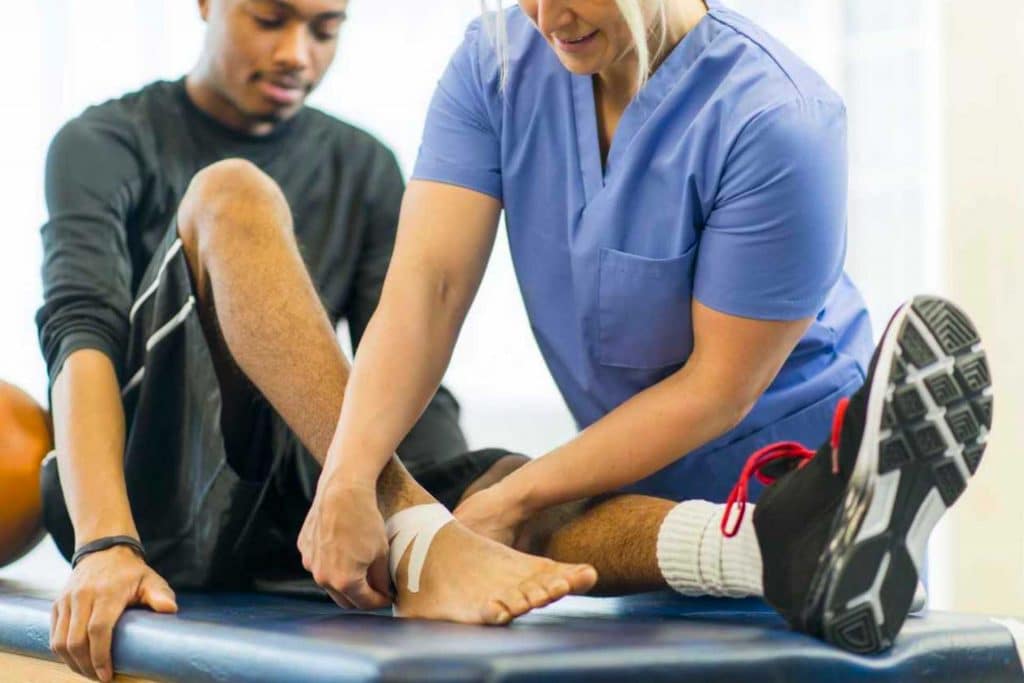
Kinesio Taping is used to support muscles and joints during movement. It is often used to improve posture, reduce strain on specific areas, and support physical activity during recovery or rehabilitation programs.
The tape usually stays in place for several days, depending on skin type, activity level, and exposure to moisture. It is designed to remain effective during daily activities such as walking, exercising, and working.
No, Kinesio Tape is made from a flexible material that allows a full range of motion. It is designed to support motion rather than restrict it, making it suitable for active use during rehabilitation or sports activities.
It can be used for a wide range of individuals, including those recovering from muscle strain, joint discomfort, repetitive movement strain, or posture-related concerns. A movement assessment helps determine whether it is suitable for a specific situation.
Most people tolerate Kinesio Tape well. In some cases, mild skin irritation or sensitivity may occur. If discomfort develops, the tape should be removed, and the skin checked before reapplication.
Copyright 2026 All Care Clinic. All Rights Reserved. Designed & Developed By CONVIRZON