
TR Therapy
Read More

Decompression therapy may be used as part of care for certain spine and musculoskeletal concerns. At All Care Clinic, we assess each person’s symptoms, medical history, movement, and functional needs before deciding whether decompression therapy is appropriate. The approach may be considered when spinal pressure, disc-related changes, or nerve irritation are contributing to discomfort and restricted movement.
Our team provides Decompression Therapy in Delta, BC for people seeking non-surgical care for selected back and neck conditions. The exact approach depends on the source of symptoms, their severity, and other health factors.
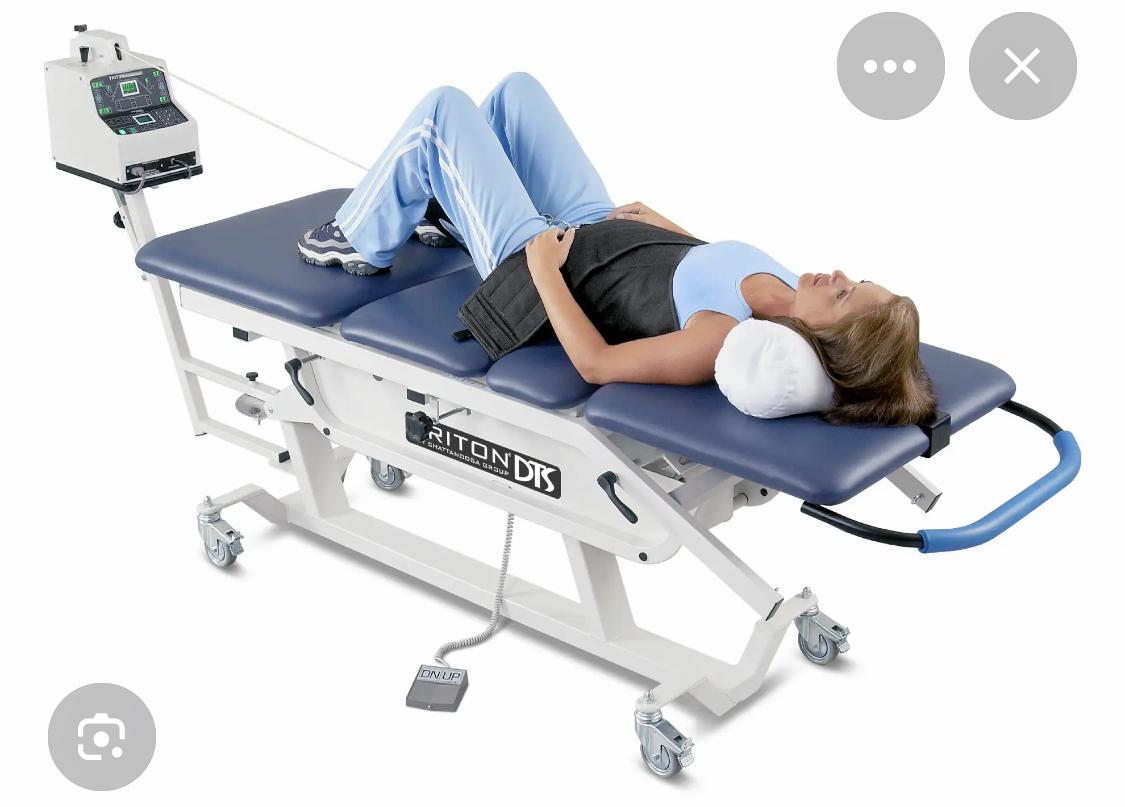
Decompression therapy is a non-surgical technique that uses controlled mechanical forces to gently unload targeted areas of the spine. It is commonly associated with care for certain disc and spinal conditions involving the neck or lower back.
The treatment is performed using specialized equipment that positions and moves the body in a controlled manner. Depending on the individual assessment, decompression therapy may be incorporated into a broader care plan that can include movement-based treatment, exercise, manual techniques, and other physiotherapy or chiropractic services.
At All Care Clinic, we first identify the likely source of symptoms rather than assuming decompression therapy is suitable for every person with back or neck discomfort.
A herniated or bulging disc can occur when changes within a spinal disc affect nearby structures. Some people may develop localized back or neck discomfort, while others may experience symptoms extending into an arm or leg.
When disc-related symptoms are present and an evaluation shows that spinal unloading may be helpful, decompression therapy may be an option.
Sciatica refers to symptoms involving the sciatic nerve, often producing discomfort that travels from the lower back through the buttock and into the leg.
When symptoms are associated with spinal or disc-related factors, Decompression Therapy in Delta, BC may form part of a broader treatment plan. Assessment is important because not every case of leg pain has the same underlying cause.
Lower back pain can develop from numerous causes, including disc changes, joint irritation, muscle strain, and other spinal conditions.
For people whose symptoms appear connected to spinal structures, decompression therapy may be considered alongside exercises and other forms of physical care.
Neck discomfort can affect movement, posture, work, sleep, and everyday activities. Disc changes or irritation around the cervical spine may contribute to some cases.
Depending on the assessment, decompression therapy may be used to address certain neck-related conditions as part of a broader care plan.
The cervical spine contains discs between the vertebrae of the neck. Changes to these discs can sometimes contribute to neck discomfort, stiffness, or symptoms extending into the shoulder or arm.
A clinical assessment helps determine whether decompression therapy is appropriate for the individual and whether additional treatment approaches should be included.
The lumbar spine carries much of the body’s load and is frequently involved in lower-back complaints. Disc changes in this region can sometimes contribute to local discomfort or symptoms that extend into the leg.
For selected lumbar disc conditions, decompression therapy may be incorporated into care alongside exercise and movement-based treatment.
Spinal stenosis involves narrowing around structures within the spinal canal or the openings where spinal nerves pass. Symptoms can vary depending on the location and severity of the narrowing.
People with suspected spinal stenosis require an assessment to determine the source of their symptoms and whether decompression therapy is appropriate.
Some people continue to experience back or neck symptoms after the initial cause has settled. Persistent discomfort can affect movement patterns, work, exercise, and daily routines.
Where spinal factors are suspected, decompression therapy may be considered as one component of a broader care plan.
People may ask about decompression therapy when they notice:
These symptoms can arise from various causes, making assessment a crucial initial step.
At All Care Clinic, the process begins with an assessment of your symptoms and physical function.
We review your symptoms, medical history, previous diagnoses, and relevant activities. We may also assess movement, strength, flexibility, and other physical factors.
The assessment helps determine whether symptoms may be related to a disc, joint, nerve, muscle, or another structure.
If decompression therapy is considered appropriate, the treatment approach is selected according to the area being treated and the person’s symptoms.
The individual is positioned on the treatment equipment while controlled mechanical forces are applied to the targeted spinal region.
Depending on the condition, exercises or movement strategies may be included to address strength, mobility, posture, or functional limitations.
Symptoms and functional changes are reviewed throughout care. The treatment plan can then be adjusted according to the person’s response.
Decompression therapy may be considered for adults with selected spinal conditions, particularly when symptoms appear related to disc or nerve irritation.
It may be discussed for people with:
However, decompression therapy in delta, bc is not suitable for every person with spinal symptoms. A proper assessment helps determine whether it fits the individual’s situation.
Back or neck symptoms that persist, recur, or interfere with normal activities may warrant an assessment.
Seek urgent medical attention for serious symptoms such as new loss of bladder or bowel control, significant or progressive weakness, numbness around the groin or inner thighs, or severe symptoms following significant trauma.
For non-emergency concerns, an assessment can help identify possible causes and determine which forms of care may be appropriate.
All Care Clinic provides Decompression Therapy in Delta, BC for people seeking care for selected spinal and musculoskeletal conditions.
Our approach begins with assessment rather than applying the same treatment to every person. Depending on the findings, decompression therapy may be combined with exercise, movement work, manual treatment, or other services available at the clinic.
If you have a diagnosed disc condition, recurring back or neck symptoms, or symptoms extending into an arm or leg, contact All Care Clinic to discuss whether an assessment is appropriate.
What conditions can decompression therapy address?
It may be considered for selected disc-related and spinal conditions, including certain cases involving herniated or bulging discs, sciatica, neck discomfort, lower-back discomfort, and spinal stenosis.
Is decompression therapy suitable for everyone with back pain?
No. Back pain can have many causes, and decompression therapy may not be appropriate for every condition. An assessment is used to determine whether it fits the individual’s symptoms.
Can decompression therapy be used for neck conditions?
Yes, decompression techniques may be used for selected cervical spine conditions. The treatment approach depends on the assessment and the source of symptoms.
Can decompression therapy be used for sciatica?
It may be considered when sciatica is associated with spinal or disc-related factors. Other causes of leg symptoms may require a different approach.
Do I need a diagnosis before seeking treatment?
Not necessarily. An assessment can help identify factors contributing to your symptoms and determine whether further medical investigation or a particular form of care is appropriate.
How long does a decompression therapy session take?
Session length can vary according to the treatment plan, the area being treated, and the individual’s needs. The clinic can provide details during your appointment.
Can decompression therapy be combined with other treatments?
Yes. Depending on the assessment, decompression therapy may be combined with exercise, mobility work, manual treatment, and other forms of care.
All Care Clinic serves people seeking Decompression Therapy in Delta, BC and surrounding communities, including areas such as:
Availability may vary by service and appointment schedule.
All Care Clinic takes an assessment-led approach to spinal and musculoskeletal care. Rather than assuming that decompression therapy in Delta, BC is appropriate based only on a symptom such as back pain or sciatica, the team considers the individual’s presentation and functional concerns before selecting treatment options.
This helps place decompression therapy within a broader care plan when appropriate, rather than treating it as a stand-alone solution for every spinal condition.
Depending on your assessment, related services may include:
If back or neck symptoms are affecting your daily activities, an assessment can help clarify possible causes and identify suitable treatment options.
Contact All Care Clinic to schedule an appointment and discuss whether Decompression Therapy in Delta, BC may be appropriate for your condition.
Call 236-332-6237 to book your appointment or visit us at 8425 120th Street, Unit 103 (LifeLabs Building, Ground Floor), Delta, BC V4C 6R2.
Copyright 2026 All Care Clinic. All Rights Reserved. Designed & Developed By CONVIRZON