

 +1 (780) 737-1019
Shockwave Therapy
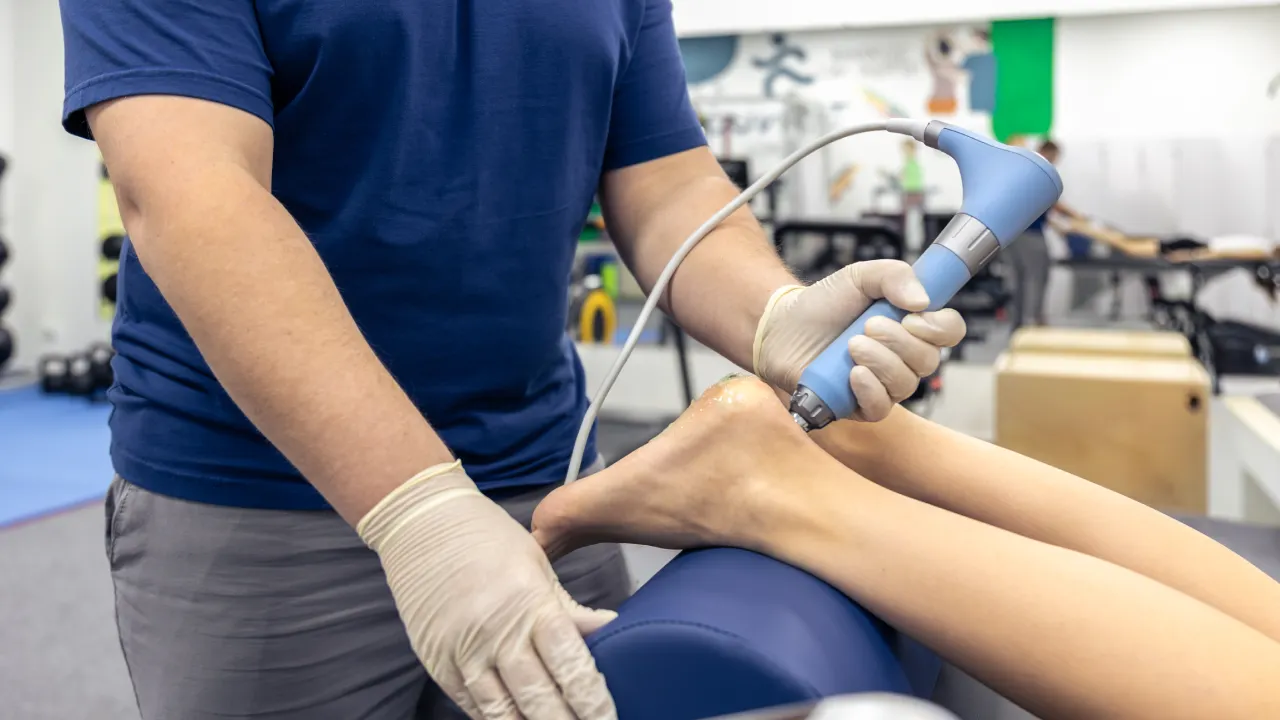
Shockwave Therapy is a non-surgical treatment that uses acoustic waves to target specific areas of the body affected by persistent tendon discomfort, muscle tightness, and certain musculoskeletal conditions. At The Bright Physio & Mindfulness Massage in Edmonton, this treatment may be considered for individuals experiencing movement restrictions or ongoing discomfort associated with physical activity, repetitive movements, or everyday tasks.
Shockwave Therapy delivers controlled sound waves to targeted tissues through a handheld device. A physiotherapy assessment helps determine whether this approach is appropriate for the individual’s symptoms, physical condition, and activity requirements. Treatment may be used alongside exercise, movement training, and other physiotherapy methods as part of a broader care plan.
What Is Shockwave Therapy?
Shockwave Therapy, also known as extracorporeal shockwave therapy (ESWT), is a noninvasive treatment that delivers acoustic energy to a targeted area of the body. It is commonly considered for certain tendon and soft-tissue conditions, particularly when symptoms persist despite initial care.
During a session, a trained practitioner places a treatment applicator against the skin over the selected area. The device delivers controlled acoustic pulses that interact with the underlying tissues. The number of pulses, intensity, and treatment duration depend on the condition being addressed and the individual’s response.
The purpose of Shockwave Therapy is to stimulate biological responses in targeted tissues and support the management of selected musculoskeletal conditions. Research findings vary according to the condition, treatment protocol, and individual circumstances, so outcomes cannot be guaranteed.
Common Applications of Shockwave Therapy
This treatment may be considered for:
- Plantar fasciitis: Heel and foot discomfort associated with irritation of the plantar fascia.
- Achilles tendinopathy: Symptoms affecting the tendon at the back of the ankle.
- Tennis elbow: Pain around the outer elbow associated with tendon problems.
- Shoulder tendon conditions: Selected cases involving rotator cuff tendons.
- Patellar tendinopathy: Tendon-related discomfort around the front of the knee.
- Other persistent tendon problems: Certain conditions that have not responded adequately to initial conservative care.
Suitability depends on the diagnosis, symptom history, medical background, and treatment goals. Shockwave Therapy is not appropriate for every source of pain or every patient.
Who Can Benefit from Shockwave Therapy?
Shockwave Therapy may be considered for adults experiencing particular tendon or soft-tissue problems that interfere with work, recreation, exercise, or daily activities.
Active Adults and Recreational Athletes
Running, jumping, weight training, and repeated sporting movements can place substantial demands on tendons. People who develop persistent heel, knee, elbow, or shoulder symptoms may be assessed to determine whether shockwave treatment is appropriate.
For example, a runner with ongoing plantar fasciitis may require an assessment of foot mechanics, training volume, footwear, and calf strength before a treatment plan is established.
Office Workers and Desk-Based Professionals
Prolonged computer work, repetitive hand movements, and sustained postures may contribute to musculoskeletal symptoms. When an examination identifies a suitable tendon condition, Shockwave Therapy may form one part of the care plan.
Manual Workers and Tradespeople
Construction workers, warehouse staff, cleaners, and other manual workers may experience repeated loading of the shoulders, elbows, knees, and feet. An assessment can help identify the structures involved and determine which treatment options are appropriate.
Older Adults
Adults who remain active may develop tendon-related problems that interfere with walking, household activities, or recreational pursuits. A practitioner should review relevant medical conditions, mobility requirements, and treatment precautions before recommending shockwave treatment.
Individuals With Persistent Tendon Symptoms
People whose symptoms continue despite activity modification, exercise, or other conservative measures may wish to discuss additional treatment options. Shockwave Therapy may be considered when the diagnosis and available clinical evidence support its use.
Problems Shockwave Therapy May Address
Musculoskeletal symptoms can arise from several causes, and accurate assessment is important before choosing a treatment. Shockwave Therapy may be considered for selected conditions involving tendons and surrounding soft tissues.
Common concerns include:
- Persistent heel discomfort: Symptoms associated with plantar fasciitis that interfere with standing or walking.
- Elbow tendon symptoms: Discomfort during gripping, lifting, or repetitive wrist movements.
- Achilles tendon problems: Symptoms during walking, running, stair climbing, or exercise.
- Knee tendon discomfort: Symptoms around the patellar tendon during jumping or repeated knee loading.
- Selected shoulder tendon conditions: Difficulties with lifting the arm or completing certain activities.
- Activity-related limitations: Difficulty maintaining exercise or work routines because of an identified tendon condition.
Not every condition responds in the same way. Shockwave Therapy may not be suitable for acute injuries, fractures, nerve-related symptoms, infections, or conditions requiring urgent medical assessment.
Key Features and Treatment Components
Acoustic Wave Delivery
What it includes: A treatment device delivers controlled acoustic pulses to the selected area.
Why it matters: The practitioner can direct treatment toward the identified tissue while adjusting the application according to the condition and the individual’s tolerance.
Expected outcome: Treatment may help manage symptoms in selected conditions, although results differ between individuals.
Condition-Specific Assessment
What it includes: A review of symptoms, activity limitations, medical history, and relevant physical findings.
Why it matters: Different conditions can produce similar symptoms. Assessment helps determine whether shockwave treatment is appropriate or whether another approach is required.
Expected outcome: A clearer treatment direction based on the suspected diagnosis and individual needs.
Adjustable Treatment Parameters
What it includes: Adjustments to the intensity, frequency, and number of acoustic pulses according to the treatment protocol.
Why it matters: Treatment settings should reflect the condition being addressed and the person’s response.
Expected outcome: An application that follows the practitioner’s clinical assessment and accepted treatment protocols.
Integration With Physiotherapy Exercises
What it includes: When appropriate, treatment may be combined with strengthening, mobility work, load management, and activity modification.
Why it matters: Tendon conditions often require changes in how the affected area is loaded, rather than relying on a single treatment method.
Expected outcome: A structured approach to managing symptoms and working toward functional goals.
Progress Reviews
What it includes: Follow-up discussions about symptoms, activity tolerance, and changes in movement.
Why it matters: Reviewing progress helps determine whether the current approach should continue, change, or be replaced by another option.
Expected outcome: Treatment decisions informed by the person’s response rather than assumptions about results.
How the Shockwave Therapy Process Works
At The Bright Physio & Mindfulness Massage in Edmonton, people considering Shockwave Therapy should first discuss their symptoms and treatment needs with the clinic.
Step 1: Initial Consultation
The appointment begins with a discussion of the main concern, when symptoms started, activities that aggravate the area, and previous care. Relevant medical history is also reviewed.
Step 2: Physical Assessment
The practitioner examines the affected area and evaluates relevant movement patterns, tenderness, strength, and functional limitations. Further medical assessment may be recommended when the cause of symptoms is unclear.
Step 3: Treatment Planning
If Shockwave Therapy is appropriate, the practitioner explains the proposed treatment area, expected sensations, possible side effects, and anticipated number of sessions. Other treatment options are discussed where relevant.
Step 4: Shockwave Treatment
A coupling gel may be applied to the skin, and the applicator is placed over the target area. Controlled acoustic pulses are delivered according to the selected protocol. People may feel tapping, pressure, or temporary discomfort during treatment.
Step 5: Aftercare and Activity Advice
The practitioner may recommend temporary activity adjustments and explain what to monitor following the appointment. Instructions depend on the treated condition and the individual’s response.
Step 6: Progress Review
Subsequent appointments, when indicated, include a review of symptoms and functional changes. The practitioner may adjust treatment, introduce or progress exercises, or recommend another course of action if the response is limited.
Potential Benefits of Shockwave Therapy
When clinically appropriate, Shockwave Therapy may contribute to the management of selected musculoskeletal conditions.
Potential benefits include:
- Non-surgical treatment option: It does not require an incision or surgical procedure.
- Targeted application: Acoustic waves can be directed toward a selected tendon or soft-tissue area.
- Support for tendon care: Research supports its use for certain conditions, including some cases of plantar fasciitis and tendinopathy.
- Short treatment sessions: The application itself often takes only several minutes, although assessment and follow-up add to appointment time.
- Combination with exercise: Treatment can form part of a wider physiotherapy plan that addresses strength, movement, and activity demands.
- Activity-focused care: Treatment goals can relate to walking, working, exercising, or completing everyday tasks.
Results depend on the condition, symptom duration, treatment protocol, and individual health factors. Some people notice temporary soreness or bruising, and some experience little change. The practitioner should discuss realistic expectations before treatment begins.
Conditions and Customer Groups Served
Shockwave Therapy may be considered for selected musculoskeletal concerns among people in Edmonton and surrounding communities.
Potential patient groups include:
- Recreational runners and athletes
- Gym members and fitness enthusiasts
- Office workers
- Construction and trade workers
- Retail and warehouse employees
- Adults with persistent heel or foot symptoms
- Individuals with selected elbow, knee, Achilles tendon, or shoulder conditions
- People seeking non-surgical options for suitable tendon problems
Treatment eligibility is determined by the condition and the person’s health status, not simply by occupation or age.
Frequently Asked Questions
What does Shockwave Therapy treat?
Shockwave Therapy is commonly used for selected tendon and soft-tissue conditions, including plantar fasciitis, Achilles tendinopathy, tennis elbow, and some cases of patellar tendinopathy. A clinical assessment is needed to determine whether it is appropriate for a particular condition.
Is Shockwave Therapy painful?
The treatment can produce tapping sensations, pressure, or temporary discomfort. Sensitivity varies according to the treatment area and the person’s condition. The practitioner may adjust the intensity based on tolerance.
How many Shockwave Therapy sessions are needed?
The number of sessions depends on the condition, symptom duration, treatment response, and clinical protocol. Some treatment plans involve several appointments spaced over multiple weeks. The practitioner can discuss an anticipated schedule following the initial assessment.
How soon can results be noticed?
Some people report changes within the first few sessions, while others require more time or experience limited improvement. Symptoms may temporarily increase after treatment. Results vary, and no specific timeline can be guaranteed.
Is Shockwave Therapy suitable for everyone?
No. It may be unsuitable for people with certain bleeding disorders, active infections in the treatment area, particular blood-clotting risks, or other medical conditions. Treatment over certain areas, including the abdomen during pregnancy, is generally avoided. The practitioner must review medical history and applicable precautions before proceeding.
Can Shockwave Therapy be combined with physiotherapy exercises?
Yes, when clinically appropriate. Exercise may address strength, mobility, tendon loading, and movement patterns that contribute to the condition. The practitioner determines which activities are suitable and whether temporary changes to exercise intensity are needed.
Shockwave Therapy Service Areas in Edmonton
The Bright Physio & Mindfulness Massage serves clients seeking physiotherapy and related care in Edmonton. People looking into Shockwave Therapy can contact the clinic to confirm availability, appointment details, and whether their condition falls within the clinic’s treatment scope.
Relevant Edmonton communities may include:
- Downtown Edmonton
- South Edmonton
- North Edmonton
- West Edmonton
- East Edmonton
- Surrounding Edmonton communities, subject to clinic location and appointment availability
For those travelling from outside Edmonton, contacting the clinic before arranging a visit can help confirm the service location and scheduling details.
Why Consider The Bright Physio & Mindfulness Massage?
Choosing a clinic for Shockwave Therapy starts with confirming that the practitioner can assess the condition, explain available treatment options, and discuss the likely benefits and limitations of the proposed approach.
At The Bright Physio & Mindfulness Massage in Edmonton, prospective clients can contact the clinic to ask about:
- Availability of Shockwave Therapy appointments
- Assessment procedures for tendon and soft-tissue conditions
- Practitioner qualifications and relevant clinical training
- Treatment protocols and appointment duration
- Whether exercise-based physiotherapy can be included in the care plan
- Fees, appointment scheduling, and applicable payment arrangements
Before booking, confirm that the service is available for the condition being treated and that the practitioner has the appropriate qualifications. The clinic should also explain relevant precautions, potential side effects, and alternative treatment options.
Related Services
Depending on the clinic’s current service list and the results of an assessment, related care may include:
Physiotherapy Assessment
An assessment can help identify possible causes of movement restrictions, tendon symptoms, and activity-related discomfort.
Therapeutic Exercise
Strengthening and mobility exercises may address physical limitations and help patients work toward functional goals.
Manual Therapy
Hands-on treatment may be considered for selected musculoskeletal conditions when clinically appropriate.
Massage Therapy
Massage may be considered for certain muscular complaints, depending on the person’s symptoms and treatment objectives.
Movement and Activity Advice
Advice on exercise progression, workplace activities, training volume, and daily movement can help patients manage demands on the affected area.
Contact The Bright Physio & Mindfulness. Massage to verify which of these services are currently available and whether they are appropriate for your condition.
Take The Next Step
Persistent tendon symptoms can interfere with walking, exercise, work duties, and everyday activities. An assessment can help identify the cause of the problem and determine whether Shockwave Therapy is a suitable option.
The Bright Physio & Mindfulness Massage in Edmonton can answer questions about treatment availability, assessment requirements, appointment scheduling, and fees.
Contact The Bright Physio & Mindfulness Massage to ask about Shockwave Therapy in Edmonton and arrange an assessment. Share the location of your symptoms, how long you have experienced them, and which activities are affected. This information can help the clinic determine the appropriate next step.
Phone: +1 780-737-1019
Address: 4904 30 Ave #105, Beaumont, Edmonton, AB T4X 3G3, Canada