Compression Stockings in Calgary
Compression stockings in Calgary are designed to apply controlled pressure to the legs, helping support blood circulation and manage swelling. They are commonly used by people who spend extended periods sitting or standing, individuals with varicose veins, and those managing certain circulation-related conditions. At Spirit of Physiotherapy and Massage, we provide compression stocking services in Calgary to help clients find suitable leg compression based on their needs, measurements, and daily activities.
Our team helps clients understand different compression options, sizing considerations, and how to wear and care for their stockings. Whether you need compression for everyday activities, work, travel, or a health-related concern, we can help you navigate the available options.
What Are Compression Stockings?
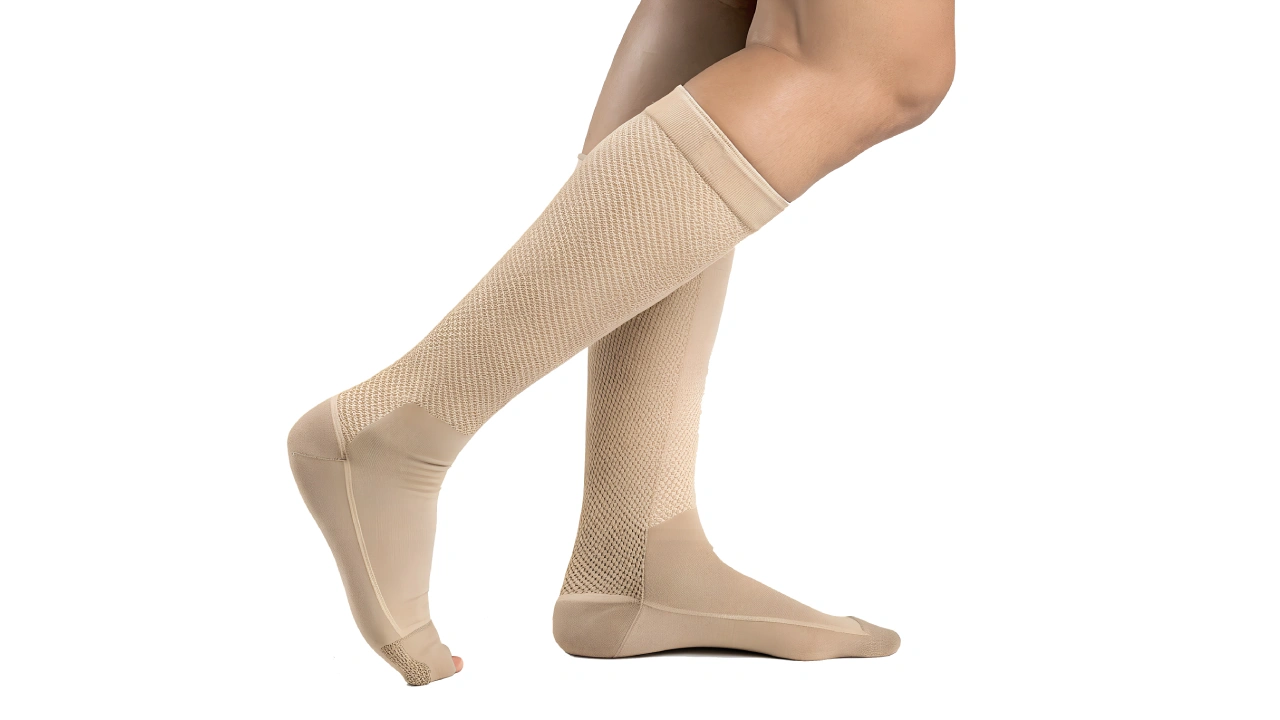
Compression stockings in Calgary are specially constructed elastic garments that apply graduated pressure to the legs. This means the pressure is generally firmer around the ankle and gradually decreases towards the knee or thigh. This pressure pattern supports the movement of blood through the veins towards the heart.
When blood circulation in the legs is affected, blood can collect in the lower extremities, contributing to swelling, heaviness, and discomfort. Compression stockings provide external support to the veins and surrounding tissues, helping reduce fluid accumulation and support venous circulation.
There are several types of compression stockings in Calgary, including:
- Knee-High Compression Stockings: Cover the foot and lower leg up to just below the knee. They are commonly used for ankle and calf swelling.
- Thigh-High Compression Stockings: Extend from the foot to the upper thigh and are used when compression is required across a larger portion of the leg.
- Compression Pantyhose: Provide compression across both legs, including the waist and hips, depending on the garment design.
- Open-Toe Compression Stockings: Have an open section around the toes, allowing additional comfort for people who prefer not to have their toes covered.
- Closed-Toe Compression Stockings: Cover the entire foot and provide compression from the toes upwards.
Compression levels are measured in millimetres of mercury (mmHg). The appropriate level depends on the person’s circulation, medical history, symptoms, and healthcare provider’s recommendations.
Who Can Benefit From Compression Stockings?
Compression stockings in Calgary may be suitable for individuals who experience leg swelling, venous circulation concerns, or discomfort associated with prolonged periods of sitting or standing.
At Spirit of Physiotherapy and Massage, we assist people who may need compression garments for different everyday and health-related circumstances.
People With Varicose Veins
Varicose veins develop when veins become enlarged and twisted, often appearing on the legs. Compression stockings can support venous circulation and help manage associated symptoms such as heaviness, aching, and swelling.
Individuals With Leg Swelling
Swelling in the ankles, feet, and lower legs can occur for several reasons, including prolonged standing, reduced mobility, and certain medical conditions. Compression garments may help manage swelling when recommended by a healthcare provider.
People Who Stand or Sit for Extended Periods
Occupations involving long hours at a desk, extended standing, or limited movement can contribute to leg heaviness and swelling. Compression stockings in Calgary may provide additional support during these activities.
Travellers
Long flights and extended road journeys can involve prolonged sitting. Some individuals may benefit from compression stockings during travel, particularly when advised by a healthcare provider based on their circulation and medical history.
Older Adults
Changes in mobility and circulation can contribute to lower-leg swelling and venous concerns as people age. Properly fitted compression garments may form part of a broader care plan.
Individuals Managing Venous Conditions
People diagnosed with chronic venous insufficiency or other venous disorders may be advised to use compression stockings as part of their care.
Problems Compression Stockings Can Help Address
Compression stockings are commonly recommended to manage symptoms associated with venous circulation and fluid accumulation in the legs.
They may help with:
- Leg Swelling: Graduated compression supports fluid movement and may reduce swelling around the ankles and lower legs.
- Heavy Legs: External pressure can help manage the sensation of heaviness associated with venous circulation concerns.
- Varicose Vein Symptoms: Compression can help manage aching, swelling, and discomfort associated with varicose veins.
- Prolonged Standing Discomfort: People who spend much of their working day on their feet may use compression garments to manage leg symptoms.
- Venous Insufficiency: Compression is commonly included in care plans for certain forms of chronic venous insufficiency.
- Travel-Related Circulation Concerns: Compression stockings may be recommended for certain travellers who are at an increased risk of blood clots.
Compression stockings do not address every cause of leg swelling or circulation problems. Sudden swelling, unexplained pain, redness, or warmth in one leg requires prompt medical assessment. People with suspected arterial circulation problems should seek medical advice before using compression garments.
Compression Stocking Services at Spirit of Physiotherapy and Massage
Choosing compression stockings involves more than selecting a garment based on appearance or size. The fit, compression level, length, and material all influence how the stockings function and feel during everyday use.
At Spirit of Physiotherapy and Massage, we help clients consider the following aspects when selecting compression garments.
Compression Level Selection
Compression stockings are available in different pressure ranges, measured in mmHg. Common categories include:
- 8–15 mmHg: Light compression, generally used for mild support.
- 15–20 mmHg: Moderate compression, sometimes used for minor swelling and everyday leg support.
- 20–30 mmHg: Firm compression, commonly prescribed for certain venous conditions and moderate swelling.
- 30–40 mmHg: Extra-firm compression, generally used under medical supervision for specific conditions.
The appropriate pressure depends on individual circumstances. Higher compression is not automatically suitable for everyone. We encourage clients to follow their healthcare provider’s recommendations when selecting a compression level.
Proper Sizing and Measurements
Correct sizing is essential for compression stockings to apply pressure as intended. Measurements may include:
- Ankle circumference
- Calf circumference
- Thigh circumference, when applicable
- Leg length
- Foot measurements, depending on the garment
Measurements are generally taken when leg swelling is at its lowest, often in the morning. A stocking that is too tight may cause discomfort, while one that is too loose may not provide the intended compression.
Stocking Length and Style
The appropriate garment length depends on the area requiring compression. Knee-high stockings are commonly used for lower-leg concerns, while thigh-high stockings may be considered when compression is needed further up the leg.
We help clients consider their daily activities, clothing preferences, comfort, and prescribed requirements when reviewing available styles.
Material and Fabric Considerations
Compression stockings are available in different fabrics, textures, and finishes. Some are made with breathable materials, while others feature different levels of stretch and fabric thickness.
Material selection can be particularly relevant for people who wear compression garments throughout the day or have difficulty putting them on and removing them.
Wearing and Care Instructions
Proper use helps maintain the stocking’s compression properties and condition. We discuss practical considerations such as putting stockings on, removing them, washing them, and storing them.
Clients should follow the manufacturer’s care instructions and replace garments when their elasticity or fit deteriorates.
How the Compression Stocking Process Works
At Spirit of Physiotherapy and Massage, our approach begins with a discussion about your requirements and the concerns affecting your legs.
1. Initial Consultation
We begin by discussing why you are considering compression stockings. This may involve leg swelling, varicose veins, prolonged standing, travel, or a recommendation from your healthcare provider.
2. Review of Your Requirements
We discuss relevant health information, existing recommendations, daily activities, and any difficulties you have experienced with previous compression garments.
3. Measurements and Sizing
Where applicable, measurements are taken to determine the appropriate stocking size. Accurate measurements help reduce problems associated with garments that are excessively tight or loose.
4. Compression and Style Selection
We review available compression levels, garment lengths, and styles according to your requirements and healthcare provider’s recommendations.
5. Fitting and Usage Instructions
After choosing the right garment, we explain how it should fit, how to wear it, and what signs may require adjustments or medical evaluation.
6. Follow-Up and Garment Care
We can discuss questions relating to regular use, garment maintenance, and replacement. If your leg swelling or measurements change, another assessment may be necessary.
Benefits of Wearing Properly Fitted Compression Stockings
When appropriately selected and used, compression stockings can provide several practical benefits for people managing venous circulation concerns.
- Support for Blood Circulation: Graduated pressure assists venous blood flow from the lower legs to the heart.
- Swelling Management: Compression can help reduce fluid accumulation in the ankles and lower legs.
- Management of Varicose Vein Symptoms: Stockings may help reduce aching, heaviness, and swelling associated with varicose veins.
- Support During Daily Activities: People who stand or sit for extended periods may find compression garments useful as part of their daily routine.
- Venous Condition Management: Compression is an established component of care for certain venous conditions.
- Support During Travel: For individuals with specific circulation-related risks, compression stockings may be included in travel health recommendations.
Results vary depending on the underlying condition, garment selection, fit, and consistency of use.
Who We Serve in Calgary
At Spirit of Physiotherapy and Massage, we work with individuals seeking compression stocking services for everyday needs and circulation-related concerns.
Our services may be relevant to:
- Office workers and people with desk-based occupations
- Retail employees and hospitality workers
- Healthcare workers who spend extended hours standing
- Travellers undertaking long-distance journeys
- Older adults managing leg swelling
- Individuals with varicose veins
- People managing chronic venous insufficiency
- Individuals whose healthcare providers have recommended compression garments
We welcome inquiries from people who are keen to learn more about compression garment options and determine whether an assessment is appropriate for their circumstances.
Frequently Asked Questions About Compression Stockings
1. What are compression stockings used for?
Compression stockings apply graduated pressure to the legs to support venous blood circulation and manage swelling. They are commonly used for varicose veins, chronic venous insufficiency, and certain cases of leg swelling. They may also be recommended for people with specific circulation-related risks during travel or prolonged periods of sitting.
2. How do I know which compression level I need?
The appropriate compression level depends on your symptoms, circulation, medical history, and the reason you need the stockings. Compression is measured in mmHg. A healthcare provider can advise which pressure range is suitable for your circumstances.
3. How long should I wear compression stockings each day?
Wearing time depends on your condition and healthcare provider’s instructions. Many people who are prescribed daytime compression stockings put them on in the morning and remove them before sleeping. However, the schedule may differ depending on the garment and medical requirements.
4. Should compression stockings feel tight?
Compression stockings should feel snug and provide even pressure without causing pain, numbness, tingling, or changes in skin colour. If you notice these symptoms, remove the garment and seek medical advice.
5. Can I wear compression stockings while sleeping?
Most daytime compression stockings are intended for use while awake and are removed before bedtime. Certain medical conditions may require different instructions. Follow the advice of your healthcare provider rather than wearing daytime garments overnight without approval.
6. Are compression stockings suitable for everyone?
No. People with certain arterial circulation problems, severe peripheral artery disease, or other medical concerns may not be suitable candidates for compression garments. A medical assessment is important before starting compression, particularly when there are existing circulation problems.
7. How do I choose the right stocking size?
Sizing generally involves measuring the ankle, calf, and occasionally the thigh and leg length. Measurements should follow the manufacturer’s sizing chart. Correct sizing is important because an unsuitable garment may cause discomfort or fail to provide the intended pressure.
8. How often should compression stockings be replaced?
The replacement schedule depends on the garment’s material, frequency of use, washing routine, and condition. Many compression stockings require replacement after several months of regular use as their elasticity gradually decreases. Follow the manufacturer’s instructions.
9. Can I wear compression stockings during a long flight?
Some travellers may benefit from compression stockings, particularly those with specific risk factors for venous blood clots. However, not everyone requires them. Discuss your individual risk factors and the appropriate compression level with a healthcare provider before travelling.
10. Where can I get compression stockings in calgary?
You can contact Spirit of Physiotherapy and Massage at 2525 Bridlecrest Way SW #80, Calgary, AB T2Y 5J4. Call +1 403-454-4451 to inquire about compression stocking services, available options, and appointment arrangements.
Service Areas
Spirit of Physiotherapy and Massage is located in southwest Calgary, serving individuals from the surrounding communities who are looking for compression stocking services.
Our location is accessible to residents of:
- Bridlewood
- Evergreen
- Somerset
- Shawnessy
- Millrise
- Silverado
- Midnapore
- Legacy
- Walden
- Chaparral
If you live elsewhere in Calgary and are looking for compression stockings, contact our clinic to discuss availability and service arrangements.
Why Choose Spirit of Physiotherapy and Massage?
At Spirit of Physiotherapy and Massage, we recognize that compression stockings need to fit properly and correspond to the reason they are being used. Selecting a garment without considering measurements, compression pressure, and existing health concerns can lead to discomfort or unsuitable compression.
Our team takes time to discuss your requirements, review sizing considerations, and explain the differences between available garment types. We also discuss practical aspects of wearing and maintaining compression stockings so you can make informed decisions about their use.
Our clinic is located in southwest Calgary, making it convenient for residents of Bridlewood and nearby communities to inquire about compression stocking services.
Address: 2525 Bridlecrest Way SW #80, Calgary, AB T2Y 5J4, Canada
Phone: +1 403-454-4451
Related Services
Alongside compression stocking services, Spirit of Physiotherapy and Massage provides other services for people addressing musculoskeletal concerns, mobility limitations, and physical discomfort.
You can also inquire about:
- Physiotherapy
- Acupuncture
- Cold Laser Therapy
- Pelvic Floor Physiotherapy
- Massage Therapy
- Biomedical Dry Needling
- Modalities
- MVA
Our team can discuss which clinic services may be relevant to your concerns and whether an appointment is appropriate.
Get Started
Finding compression stockings that fit correctly involves considering your leg measurements, compression requirements, and everyday activities. At Spirit of Physiotherapy and Massage, we are here to discuss your requirements and help you navigate the available options.
If you are looking for compression stockings in Calgary, contact our clinic to inquire about an appointment and the available services.
Address: 2525 Bridlecrest Way SW #80, Calgary, AB T2Y 5J4, Canada
Phone: +1 403-454-4451
Call Spirit of Physiotherapy and Massage to discuss compression stocking services and arrange your visit.