Compression Support That Fits Into a Lymphatic Care Plan
Swelling can make everyday movement feel harder. A heavy or tight limb may affect walking, standing, exercise, sleep, or participation in normal activities. Graduated pneumatic compression pumps and garments can form part of a physiotherapy plan when external compression is appropriate.
These systems use controlled air pressure to apply sequential compression to an arm or leg. The pressure pattern can help move fluid through the affected area while the person remains seated or lying down.
At our physiotherapy clinic, we can help assess whether a pneumatic compression system may suit your needs, explain how the equipment works, and help you select a pump and garment based on the area being treated and your prescribed compression needs.
What Are Graduated Pneumatic Compression Pumps?
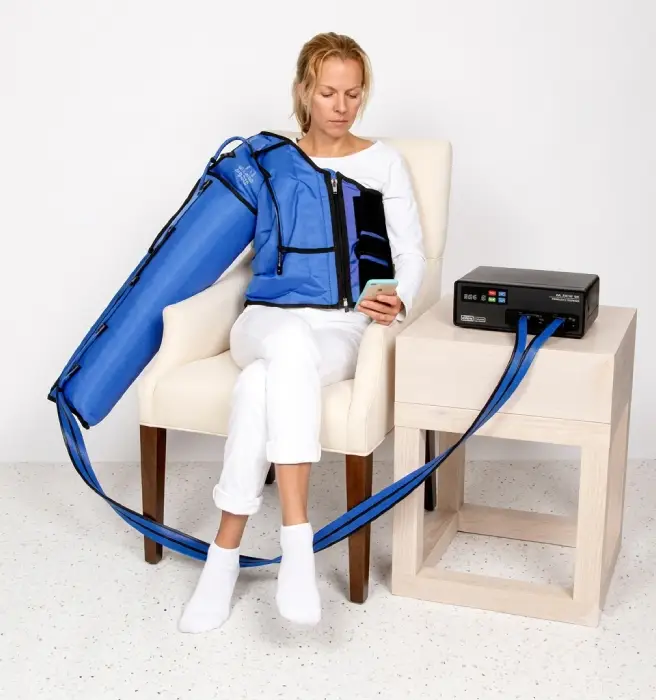
A graduated pneumatic compression pump is a device that connects to an inflatable garment worn around an affected limb.
The garment contains multiple air chambers. As the pump operates, the chambers inflate and deflate in sequence. Compression generally starts farther from the body and progresses toward it, creating a graduated pressure pattern.
The exact pressure, cycle, duration, and garment configuration can vary according to the device and the person’s clinical needs.
These systems may be used as part of care for conditions involving swelling or fluid accumulation, including:
- Lymphedema
- Chronic limb swelling
- Post-surgical swelling
- Venous-related swelling
- Lipedema-related symptoms
- Swelling following certain injuries
- Reduced mobility associated with limb swelling
A physiotherapy assessment can help determine whether pneumatic compression is appropriate for your situation.
What Are Compression Garments?
Compression garments are wearable products that apply pressure to a specific part of the body. They may be used on the arm, leg, hand, foot, or other areas depending on the garment design.
Common examples include:
- Compression sleeves
- Arm garments
- Leg garments
- Thigh garments
- Knee-high garments
- Full-leg garments
- Foot and hand components
Some garments are used alongside pneumatic compression pumps, while others may be used independently as part of a broader swelling-management plan.
Correct sizing matters. A garment that is too loose may not provide the intended compression, while one that is too tight may cause discomfort or other problems.
How Does Pneumatic Compression Work?
A pneumatic compression system uses air-filled chambers to apply controlled pressure around the limb.
During a treatment session:
- The garment is placed around the affected area.
- Tubing connects the garment to the pump.
- The pump fills individual chambers with air.
- Compression moves through the chambers in sequence.
- The cycle repeats according to the selected settings.
The sequential pressure may assist fluid movement through the tissues and lymphatic system.
Pneumatic compression is not appropriate for every person or every type of swelling. Assessment is important before using a pump or compression garment.
Who May Use These Products?
These products may be considered for people dealing with persistent swelling that affects daily activities or mobility.
They may also be considered when a person requires an at-home compression routine as part of an established physiotherapy or lymphedema-management plan.
Your physiotherapist may consider factors such as:
- Location of swelling
- Severity and pattern of swelling
- Skin condition
- Circulation
- Existing medical conditions
- Mobility level
- Current compression use
- Ability to put on and remove the garment
- Comfort during compression
This assessment helps determine whether a pneumatic pump, compression garment, or another approach is appropriate.
Choosing the Right Pump and Garment
Compression equipment is not a one-size-fits-all purchase.
Different pumps have different chamber configurations, controls, pressure ranges, treatment programs, and garment options. Garments also vary in length, construction, sizing, and compression level.
Our team can help you review the available options based on your clinical situation and intended use.
We can discuss:
- Which body area requires compression
- Garment size and fit
- Pump configuration
- Pressure settings
- Treatment duration
- Ease of use at home
- Cleaning and garment care
- Replacement considerations
The aim is to help you use the equipment correctly and safely within your physiotherapy plan.
Using Compression Equipment at Home
If a pneumatic compression system has been recommended for home use, your physiotherapist can explain how to position the garment, connect the tubing, operate the pump, and follow the prescribed settings.
You should follow the instructions provided for your specific device rather than changing pressure or treatment duration on your own.
Stop using the equipment and seek medical advice if you develop unusual pain, numbness, skin colour changes, significant discomfort, shortness of breath, or another concerning symptom.
Certain medical conditions can make compression unsuitable or require additional medical assessment before use.
Get Help Selecting Compression Equipment
Graduated pneumatic compression pumps and garments can be useful components of a swelling-management plan for appropriate patients. The right equipment depends on the affected area, clinical findings, compression requirements, and ability to use the system correctly.
If you are considering a compression pump or garment, speak with our physiotherapy team. We can assess your needs, explain available product options, and help you determine what type of equipment may fit into your care plan.
Contact our clinic to discuss available compression products and arrange an assessment.
Address: 25 Charlton Ave E, Suite 202, Hamilton, ON L8N 1Y2, Canada
Phone: +1 365-323-0629