 (905) 609-1070
 drh@naturalhealthoptions.ca
 2349 Fairview Street, Unit 211, Burlington, ON L7R 2E3

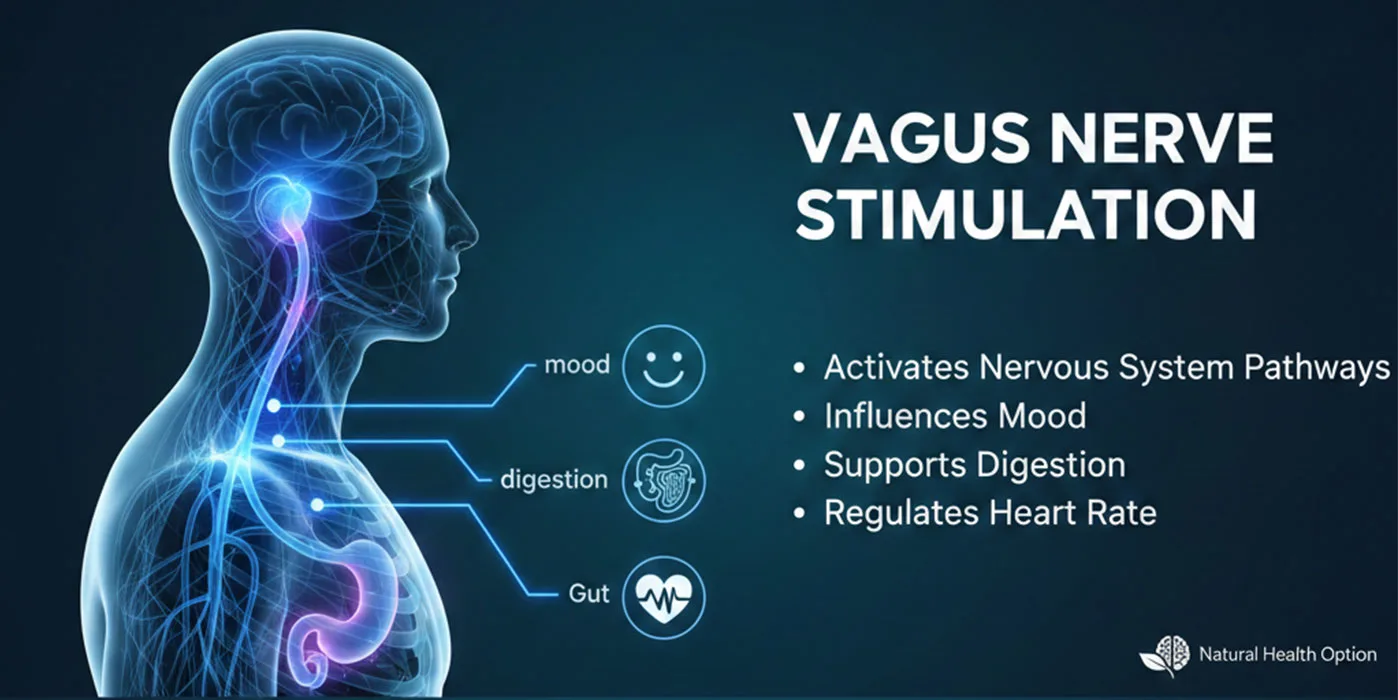
Navigating the Modern Stress Response with Vagus Nerve Stimulation
The pace of life in Burlington often feels breakneck. Between commuting along the QEW, managing a career, and maintaining a home, the body is usually in a state of high alert. This persistent “fight or flight” mode is a common hurdle for many people. When the nervous system remains stuck in this reactive phase, it impacts sleep, digestion, and even mood.
Finding a way to transition back into a state of calm is essential for long-term health. Many are looking for methods that work with the body’s innate biological systems rather than against them. This is where the concept of the tenth cranial nerve comes into play. It serves as a vital communication highway between the brain and the internal organs.
Learning to influence this pathway through Vagus Nerve Stimulation provides a practical way to encourage a “rest and digest” response. By focusing on how this nerve functions, it is possible to address the physical manifestations of stress at the source. Moving toward a balanced state requires consistency and a shift in how we approach daily wellness.
The Role of the Vagus Nerve in Daily Wellness
The vagus nerve is the longest nerve of the autonomic nervous system. It originates in the brainstem and extends through the neck into the chest and abdomen. Its primary job is to manage the parasympathetic nervous system, which acts as the body’s natural braking system. When you are relaxed, this nerve is active, sending signals to slow the heart rate and promote calm.
Indicators of Low Vagal Tone
When the vagus nerve is not functioning optimally, it is often referred to as having low “vagal tone.” Think of it like a muscle that has become weak. When the tone is low, it is harder for the body to bounce back after a stressful event. Common signs that the nervous system is struggling to regulate include:
- Persistent feelings of restlessness or worry.
- Digestive issues like bloating or slow transit time.
- Difficulty falling asleep or staying asleep through the night.
- Frequent physical tension in the neck and shoulders.
Improving this tone is a gradual process. Just as you would train for a 5k run at Spencer Smith Park, you can train your nervous system to become more resilient through specific, intentional practices.
Practical Ways to Incorporate Vagus Nerve Stimulation
There are several non-invasive methods to engage this nerve and promote a sense of internal balance. Many of these can be done at home or during a quiet moment in your day. The goal is to send a physical signal to the brain that the environment is safe, allowing the body to exit the stress loop.
Cold Exposure
One of the fastest ways to trigger a response is through cold water. Splashing ice-cold water on your face, or ending a shower with 30 seconds of cold water, can stimulate nerve endings. This sudden temperature change forces the body to adjust, which in turn activates the parasympathetic pathway.
Deep, Diaphragmatic Breathing
Most people breathe shallowly when they are busy. This reinforces the stress response. Shifting to deep belly breathing—where the exhale is longer than the inhale—directly engages the vagus nerve.
- Sit comfortably with your back straight.
- Place one hand on your belly.
- Inhale slowly through the nose for a count of four.
- Exhale through pursed lips for a count of six or eight.
- Repeat this for five minutes.
Humming and Chanting
Because the vagus nerve passes through the area of the vocal cords, the vibrations created by humming, singing, or chanting can stimulate it. This is why many people find vocal practices, or even just listening to specific frequencies, grounding. It is a physical vibration that moves through the throat and chest, signalling the nervous system to settle.
Exploring Professional Natural Health Options
While at-home techniques are valuable, the nervous system sometimes requires a more structured approach. In Burlington, residents often look for ways to supplement their self-care routines with external support. Professional applications of Vagus Nerve Stimulation can provide a more consistent signal to the brain, helping to “reset” the baseline of the nervous system.
At Natural Health Option, the focus remains on supporting the body’s natural ability to regulate itself. By utilizing technology and manual techniques that target these neural pathways, it becomes easier to manage the physical toll of a busy lifestyle. This approach does not rely on invasive measures but instead works to harmonize the signals sent between the gut and the brain.
The Connection Between Gut Health and the Brain
The vagus nerve is the primary line of communication for the “gut-brain axis.” About 80% of the fibres in the vagus nerve are sensory, meaning they carry information from the body up to the brain. If the gut is inflamed or the microbiome is out of balance, the nerve sends “danger” signals to the brain, which can manifest as brain fog or low mood.
Addressing gut health is often a necessary step alongside nerve stimulation. When the internal environment is calm, the nerves can communicate more effectively, leading to better focus and physical comfort.
Building a Resilient Nervous System
Resilience is not about avoiding stress entirely—that is impossible in a modern environment. Instead, it is about how quickly you can return to a neutral state after a challenge. Incorporating a variety of strategies creates a robust foundation for health.
Daily Habits for Long-Term Balance
Consistency is more important than intensity for neurological health. Consider these small shifts:
- Mindful Eating: Avoid eating while working or scrolling on a phone. Digestion requires a parasympathetic state to function.
- Nature Walks: Spending time in green spaces, such as the Royal Botanical Gardens, helps lower cortisol levels and supports vagal activity.
- Social Connection: Positive social interactions and laughter are natural ways to stimulate the nerves and feel more grounded.
By viewing health through the lens of nervous system regulation, the path forward becomes clearer. It isn’t just about managing symptoms; it is about changing the body’s underlying state.
Summary of Neural Regulation Strategies
The journey toward better health often leads back to the nervous system. By understanding how to influence the vagus nerve, you gain a tool for managing how you feel and react to the world. Whether through cold exposure, breathing exercises, or professional support, the goal remains the same: a body that feels safe and a mind that feels clear.
The techniques discussed here provide a starting point for anyone looking to reduce the physical impact of stress. Taking the time to nourish this part of the body yields benefits across all areas of life, from improved digestion to more restorative sleep. For those in Burlington seeking a path toward balance, focusing on these biological pathways provides a grounded, logical way to move forward.